How to Upgrade Your Class B CDL to a Class A CDL
If you already have a Class B Commercial Driver’s License (CDL), you have taken an important step toward building a career in the trucking and transportation industry. But what if you want to drive tractor-trailers, operate larger combination vehicles, or qualify for more trucking jobs?
Upgrading your Class B CDL to a Class A CDL could be the next step in your career.
A Class A CDL allows qualified drivers to operate certain combination vehicles, including many tractor-trailers, when they meet the applicable licensing requirements. With a Class B CDL, your driving options are generally more limited to certain single vehicles and other qualifying vehicles.
The good news is that you may not need to start your CDL journey from the beginning. Your existing experience can give you a useful foundation as you work toward a Class A license.
In this guide, we’ll explain how to upgrade from a Class B CDL to a Class A CDL, what training you may need, which tests you must pass, and how ELDT1.com can help you complete the required theory training.
1. Understand the Difference Between a Class B and Class A CDL
Before starting the upgrade process, it helps to understand what changes when you move from a Class B to a Class A CDL.

Class A CDL
A Class A CDL generally qualifies you to operate combination vehicles with a gross combination weight rating (GCWR) of 26,001 pounds or more, provided the towed vehicle has a GVWR exceeding 10,000 pounds and other applicable requirements are met. This includes many tractor-trailers and other large combination vehicles.

Class B CDL
A Class B CDL generally covers a single vehicle with a GVWR of 26,001 pounds or more, or certain vehicles towing a vehicle that does not exceed 10,000 pounds GVWR. Common examples include straight trucks and certain buses.
Your exact driving privileges also depend on your endorsements and restrictions. You can review the official requirements on the FMCSA website. https://tpr.fmcsa.dot.gov/Drivers/Applicability
2. Check Your Eligibility for a Class A CDL Upgrade
If you already hold a Class B CDL, you have a starting point for the upgrade process. Before applying, check that you meet the applicable requirements.
You will generally need to:
-
Meet the age requirements for the type of commercial driving you plan to do.
-
Hold a valid driver's license and meet applicable medical qualification requirements.
-
Meet your state's requirements for applying for a Class A commercial learner's permit (CLP).
-
Complete the applicable Class A Entry-Level Driver Training (ELDT).
-
Pass the required Class A knowledge and skills tests.
Requirements can vary by state and by the type of commercial driving you intend to do. Check with your state licensing agency before beginning your application.
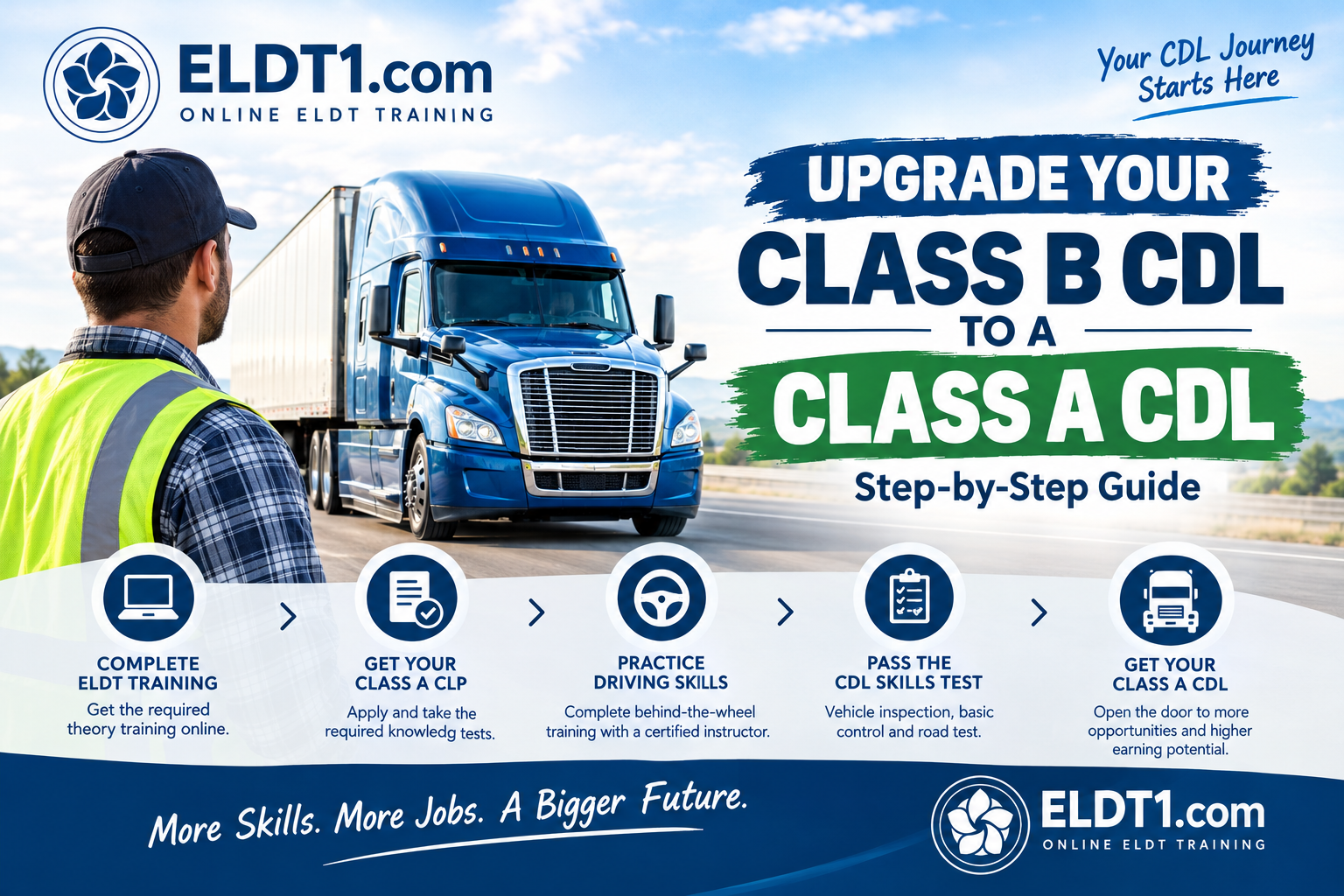
3. Complete the Required Class A ELDT Theory Training
One of the most important steps when upgrading from a Class B CDL to a Class A CDL is completing the required Entry-Level Driver Training.
The good news is that FMCSA provides a specific Class B-to-Class A upgrade theory curriculum. Eligible drivers can use this curriculum instead of repeating every unit of the full standard Class A theory curriculum.
Your theory training covers topics relevant to safely operating a Class A commercial vehicle, including vehicle operation, safe driving practices, and other required instructional areas.
At ELDT1.com, drivers can access online ELDT training designed to help them study the required material at their own pace.
Ready to get started?
Visit the Class A ELDT Training page to learn more about the available training.
Remember that you must select the appropriate curriculum for your situation. Completing online theory training alone does not complete all the requirements for a Class A CDL upgrade.
4. Get Your Class A Commercial Learner's Permit
Once you understand the training and licensing requirements, the next step is to apply for your Class A commercial learner's permit.
Your state DMV or licensing agency can explain which application forms, knowledge tests, identification documents, and fees apply to you.
Depending on your state and circumstances, you may need to pass the required written knowledge tests before receiving your permit.
With your Class A CLP, you can begin the practical training required to learn how to operate a combination vehicle safely, subject to the permit's restrictions.
5. Complete Behind-the-Wheel Training
Driving a tractor-trailer requires different skills from driving a straight truck. Even experienced Class B drivers need to develop the skills required for the larger vehicle.
The applicable Class A ELDT requirements include behind-the-wheel training on a practice range and public roads. Training must be completed with an appropriately registered provider and qualified instructors.
During practical training, you may work on skills such as:
-
Pre-trip vehicle inspections
-
Coupling and uncoupling a tractor and trailer
-
Straight-line backing and other backing maneuvers
-
Turning, lane positioning, and lane changes
-
Safe following distances and speed management
-
Driving on public roads and highways
-
Handling a larger combination vehicle in different traffic conditions
The goal is not simply to pass the test. It is to become a safe, confident driver who understands how a tractor-trailer responds on the road.
Important for California drivers: California has additional behind-the-wheel training requirements for CDL applicants. Confirm the applicable hours and documentation directly with the California DMV before scheduling your skills test.
6. Pass the Class A CDL Skills Test
After completing the required training, you can move toward the final skills test when your state confirms that you are eligible.
The Class A CDL skills test generally evaluates three areas:
-
Vehicle inspection: Demonstrate that you can inspect the commercial vehicle and identify important safety components.
-
Basic vehicle control: Show that you can maneuver the vehicle safely during required backing and other control exercises.
-
Road test: Demonstrate safe driving, observation, turning, lane control, and other required driving skills on public roads.
The precise test procedures and scheduling process depend on your state.
Once you successfully meet the applicable requirements, the licensing agency can issue your upgraded Class A CDL, subject to any remaining conditions.
7. How Long Does It Take to Upgrade From Class B to Class A?
There is no single timeline that applies to every driver. The time needed depends on your state, training schedule, prior experience, permit process, and test availability.
Drivers who already have commercial driving experience may be familiar with vehicle inspections, traffic awareness, and other basic commercial driving practices. However, you still need to demonstrate proficiency with Class A vehicles.
A practical way to get started is to complete your required theory training, arrange hands-on instruction, and prepare for the permit and skills tests without unnecessary delays.
8. Can You Complete Class A ELDT Online?
Yes. The required theory portion of Class A ELDT can be completed online when you use an appropriate provider listed on the FMCSA Training Provider Registry.
However, online training does not replace the required behind-the-wheel range and public-road training for a Class A CDL upgrade. Your theory and practical training may be completed through separate registered providers, provided all applicable requirements are met.
Training Provider Registry
ELDT1.com provides online ELDT theory courses to help drivers prepare for their commercial driving goals.
Visit ELDT1.com Class A Training to explore the course and take the next step toward upgrading your CDL.
Frequently Asked Questions
Do I need to repeat all my CDL training if I already have a Class B license?
Not necessarily. FMCSA offers a separate Class A upgrade theory curriculum for eligible Class B CDL holders. You must still complete the applicable behind-the-wheel training and meet your state's licensing requirements.
Is Class A ELDT required when upgrading from Class B to Class A?
Generally, yes. Drivers upgrading from Class B to Class A must complete the applicable ELDT requirements before taking the CDL skills test, unless a recognized exception applies.
Can I take Class A ELDT online?
You can complete the theory portion online through an appropriate registered training provider. Required practical training must also be completed before the skills test.
Do I need a Class A learner's permit?
You generally need a Class A commercial learner's permit and must comply with the applicable permit requirements before completing the licensing process. Check your state DMV for the exact procedure.
Will upgrading to a Class A CDL help me qualify for more trucking jobs?
A Class A CDL can qualify you to apply for a wider range of combination-vehicle driving positions, including many tractor-trailer jobs. Hiring requirements, experience, endorsements, driving history, and employer qualifications still apply.
How do I start my Class A ELDT training?
Visit ELDT1.com and explore the Class A ELDT Training course to learn about online theory training for your CDL upgrade.
https://www.fmcsa.dot.gov/regulations/federal-register-documents/2019-04044